
Wet Basements and Crawl Spaces in Minneapolis
For water at the wall, up through the floor drain or across the floor after the sump pump stops.
Water in the Basement or Crawl Space
For a basement that took water in a thaw, a heavy rain or a pump failure, the restoration side is water removal, drying, moisture checks, removing what cannot be saved, cleanup and rebuilding.
Some of the fix belongs to other trades. Waterproofing, drain tile, a new sump pump and foundation repair are separate work, and drying only holds once the water has stopped coming in. A crawl space follows the same pattern, with less room to work and more need for air movement.
Sump Pump Failures and Standing Water
Standing water after a sump pump quits usually comes down to a power cut, a stuck float switch, a worn-out motor, or a discharge line that froze or clogged. A storm can bring several at once: heavy rain fills the pit just as the power goes out.
Deep water is pumped out first, often through a hose run out a window. Then the rest is extracted and drying starts on the walls, the floor and anything stored down there.
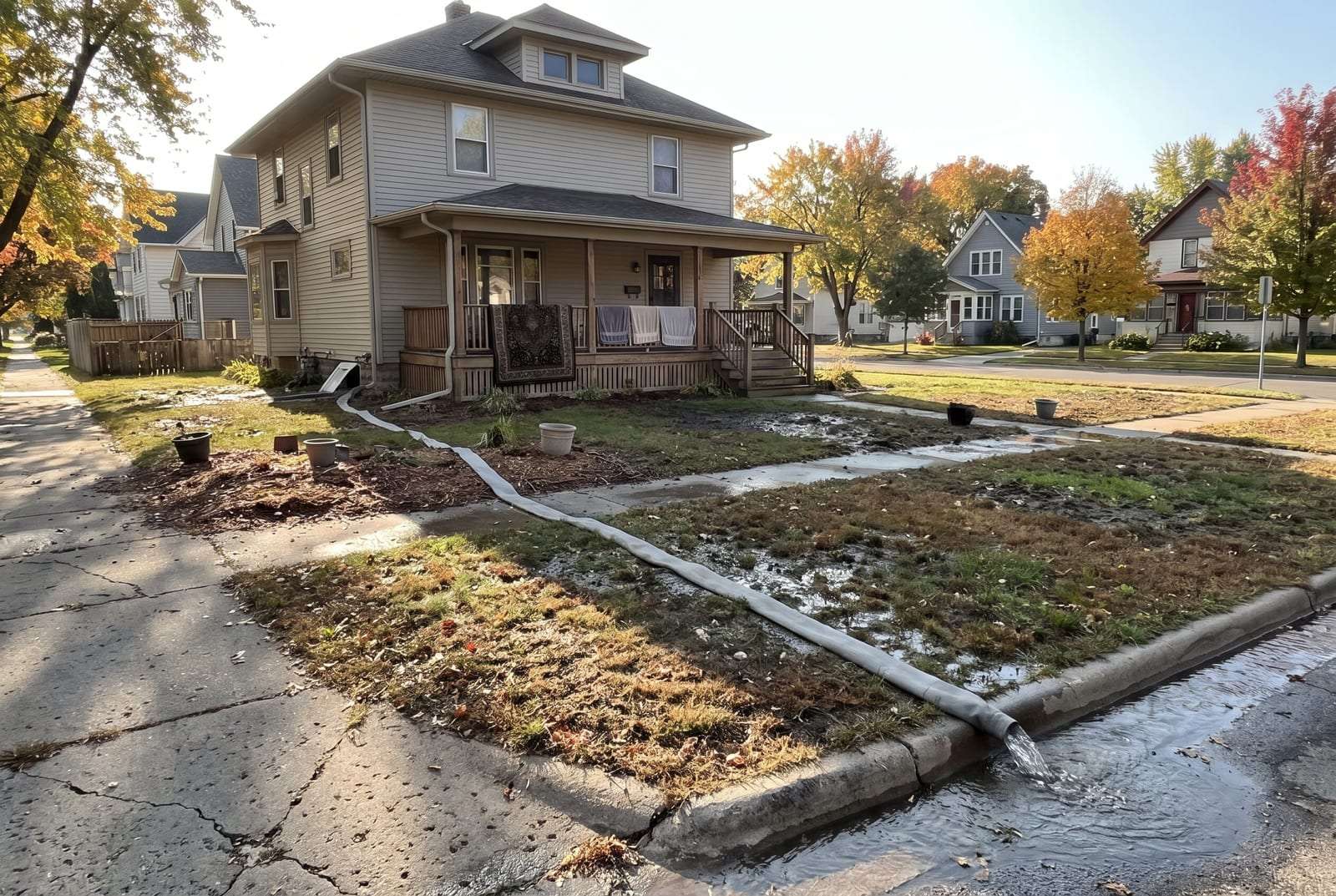
Sump pump quit during a storm and we had an inch of water in the basement. The tech got it extracted and set up drying equipment. While he was down there he checked the walls and noticed some efflorescence on the foundation. Told us it was worth watching and left it at that. Basement's dry now and he was quick about it.
Basement Water Clues and Their Usual Causes
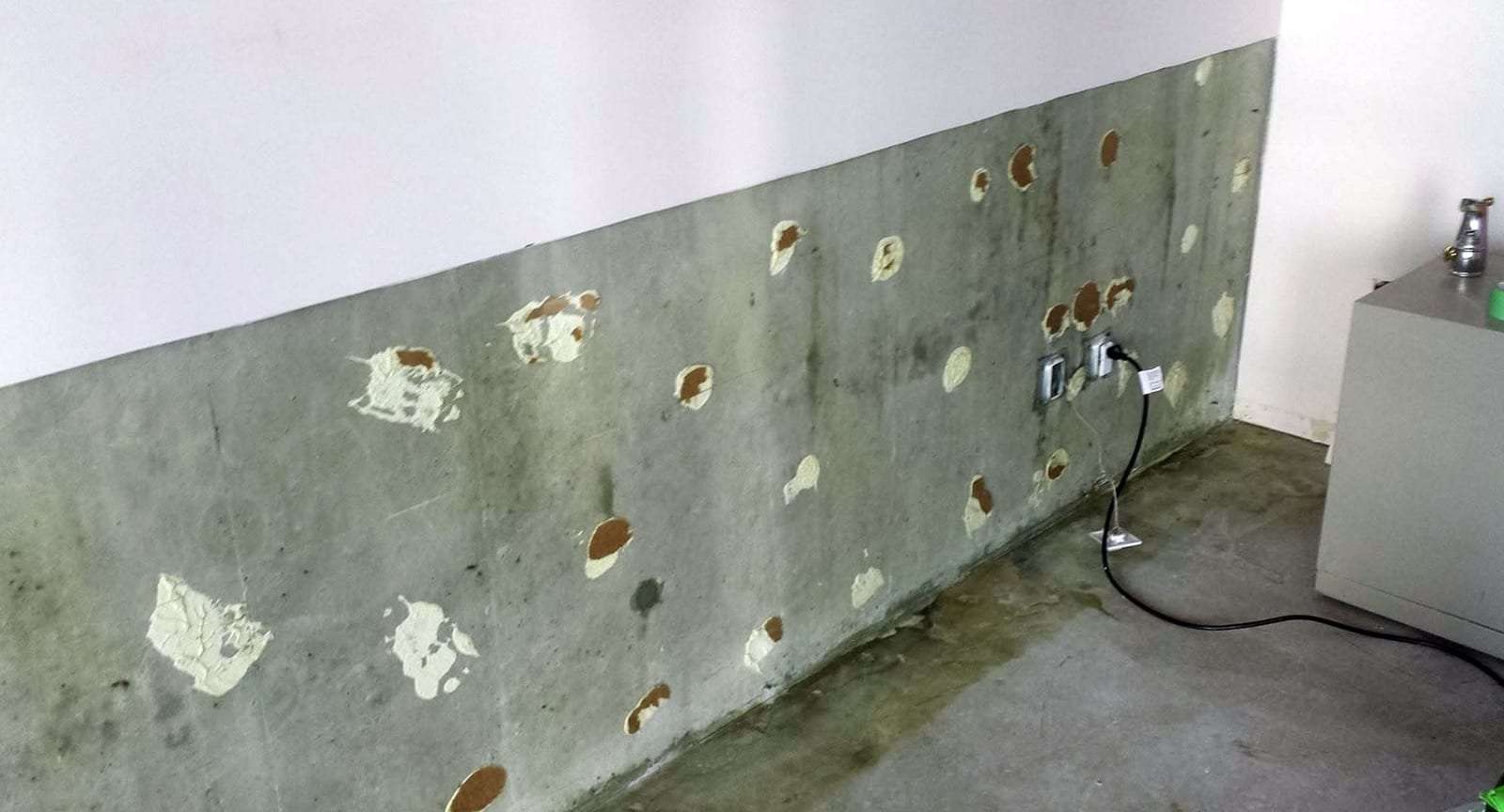
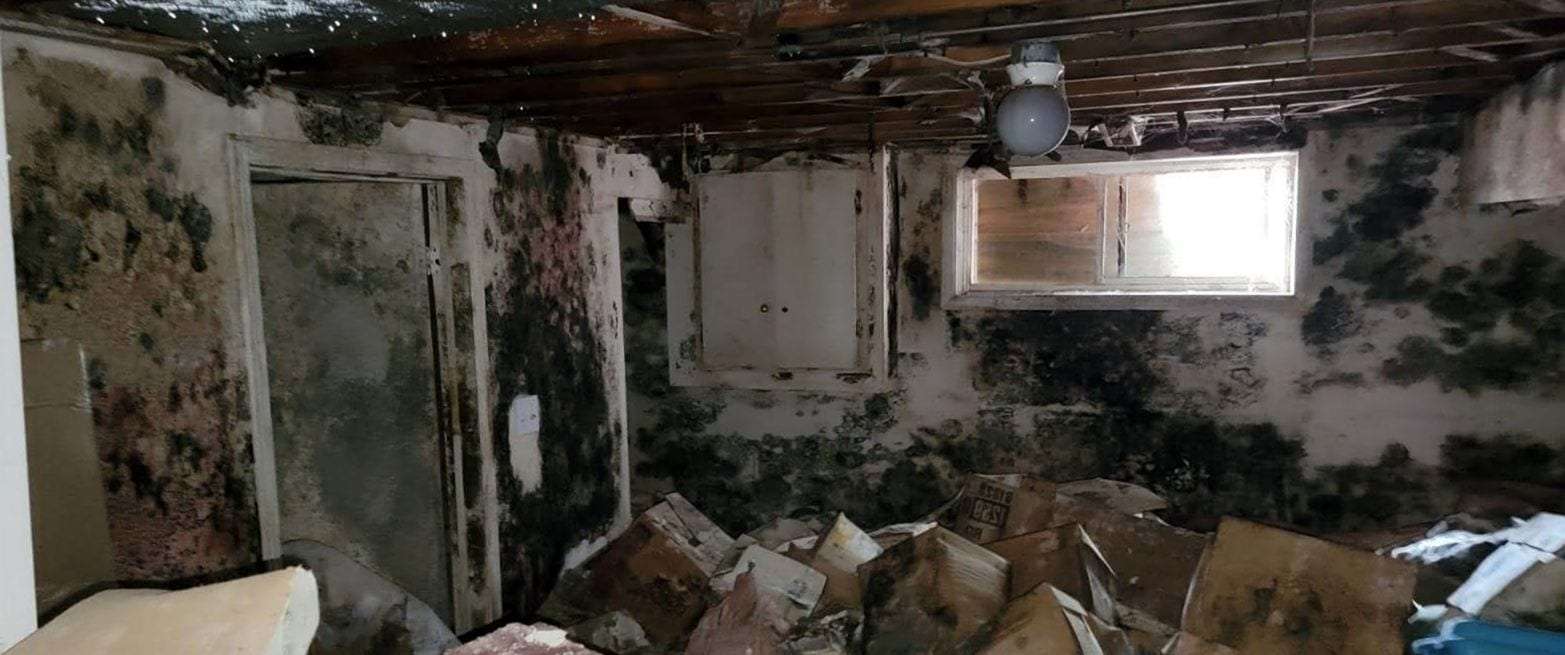
Where basement water shows up says a lot about where it came from. Finished walls hide the rest: once paneling or drywall comes off, the staining and growth often run farther along the concrete than the wet carpet suggested.
| Symptom | Likely cause | What to do now | What a restoration visit covers |
|---|---|---|---|
| Water at the wall-floor joint | Groundwater pushed up under pressure after rain or snowmelt | Move things off the floor and check that downspouts empty well away from the house | Water removal, drying and removing wet pad or drywall; drain tile and waterproofing are separate work |
| Damp walls with white mineral deposits | Moisture moving through block or concrete and leaving salts behind as it dries (efflorescence) | Keep stored things off the wall and run a dehumidifier | Moisture checks in finished walls and framing; the foundation itself is a waterproofing question |
| Floor drain backup | A blocked main drain, or a city sewer overloaded by heavy rain | Stop using sinks, toilets and the washer, and stay out of the water | Treated as black water: extraction, removing what it touched, cleaning, disinfecting and drying; the drain line is a plumber’s |
| Standing water after the sump pump stops | A power cut, a stuck float, a failed motor, or a frozen or blocked discharge line | Stay out if water may reach outlets or the panel; check the breaker only if it is safe to reach | Extraction, drying and moisture checks, then rebuilding; pump repair or replacement is separate |
| Musty smell with no visible water | High humidity, a slow leak behind a finished wall, or hidden mold | Run a dehumidifier and note where the smell is strongest | Moisture checks to find the source, opening the wall if needed, and mold remediation where growth is found |
Where Is the Water Coming From?
Four yes-or-no questions give a first idea of the source and the next step.
Answer the four questions, then press the button for a likely source and a next step.
First Moves in a Flooded Basement
- Keep out if water may touch outlets, cords, the furnace or the electrical panel.
- Move boxes, rugs and anything else you can lift off the floor.
- Run a dehumidifier only if the area is safe and the outlet you use is dry.
- Check the sump pump and its discharge line for ice, a clog or a kink.
- Note when the water appeared and what the weather was doing.
Carpet, Pad and Drywall in a Finished Basement
Once a finished basement takes water, the carpet and drywall decide most of the cleanup, and the rules are the same as for any water damage. A musty smell days after the water is gone usually means something stayed wet: the pad, the bottom of the drywall or boxes against a wall.
Can wet carpet and drywall in a basement be saved?
Sometimes. Carpet wet by clean water and extracted within a day or two can often be dried and kept, though the pad under it is usually replaced. Drywall that stayed firm may dry in place; board that wicked water up is cut out above the wet line.
Water from a floor drain backup or floodwater from outside is a different case. The carpet, the pad and the lower drywall it touched are removed, and the concrete is cleaned and disinfected before drying.
Snowmelt, Clay Soil and Old Block or Stone Foundations
For Minneapolis basements, spring is the wet season. Snowmelt and spring rain soak the ground while the soil underneath is still frozen, and in low spots the water table rises close to the basement floor. Clay soils hold water against the walls instead of letting it drain away. Many older houses sit on block or stone foundations, which let more moisture through than poured concrete and show it as damp patches and white crust.
Pump-Out and Drying for a Wet Basement
Call with how deep the water is and where it seems to come in, or send a request with the address.