
Storm Damage Repair in Minneapolis
Tarping, board-up, water removal and inside repairs after hail, high wind, a falling tree or an ice dam opens a house to the weather.
Keeping the Weather Out Comes First
For a house or rental hit by hail, high wind, a falling tree or heavy snow, the first job is keeping more water out. A hole in the roof or a broken window lets rain and meltwater into the attic, walls and ceilings, and every day it stays open adds to the repairs.
Storm restoration covers the opening with tarps or plywood, removes the water, dries the structure and repairs the inside: drywall, flooring, trim and paint. Tree removal and roof replacement belong to a tree service and a roofer. Insurance claims are a regular part of storm work, and how each stage gets documented is covered under Our Process.
Hail, Wind, Falling Trees and Snow Load
Each kind of storm leaves its own pattern of damage, with a step that protects the house right away and work that follows once the weather clears.
| Event | Typical damage | Immediate protection step | Follow-up work |
|---|---|---|---|
| Hail | Bruised shingles, broken windows and skylights, dented vents | Board broken glass; tarp damaged roof areas | Roof and window repairs by those trades; drying wet ceilings |
| High wind and tornado-season storms | Shingles torn away, roof sections lifted, windows blown in | Wait for the all-clear, then tarp the roof and board up openings | Structural repairs by a contractor; water removal, drying, new drywall and trim |
| Fallen tree or limb | A punctured roof deck, broken rafters, rain in the attic and rooms | Stay out of the rooms under it; tree lifted off by a tree service, then the hole tarped | Framing repaired by a roofer or framer; drying, new ceiling drywall and paint |
| Heavy snow load | A sagging roof, cracked rafters, leaks where the deck flexed | Keep out from under a sagging ceiling; have a roofer clear the snow | Structural repairs by a contractor; drying and inside repairs |
| Ice dam | Meltwater pushed under shingles into ceilings and the tops of outside walls | Catch drips, move belongings, have a roofer cut channels in the ice | Wet drywall and insulation removed, the cavity dried, patched and painted |
Tarps, Board-Up, Water Removal and Ice-Dam Leaks
For storm damage that reached the inside of the house, the work comes down to four jobs.
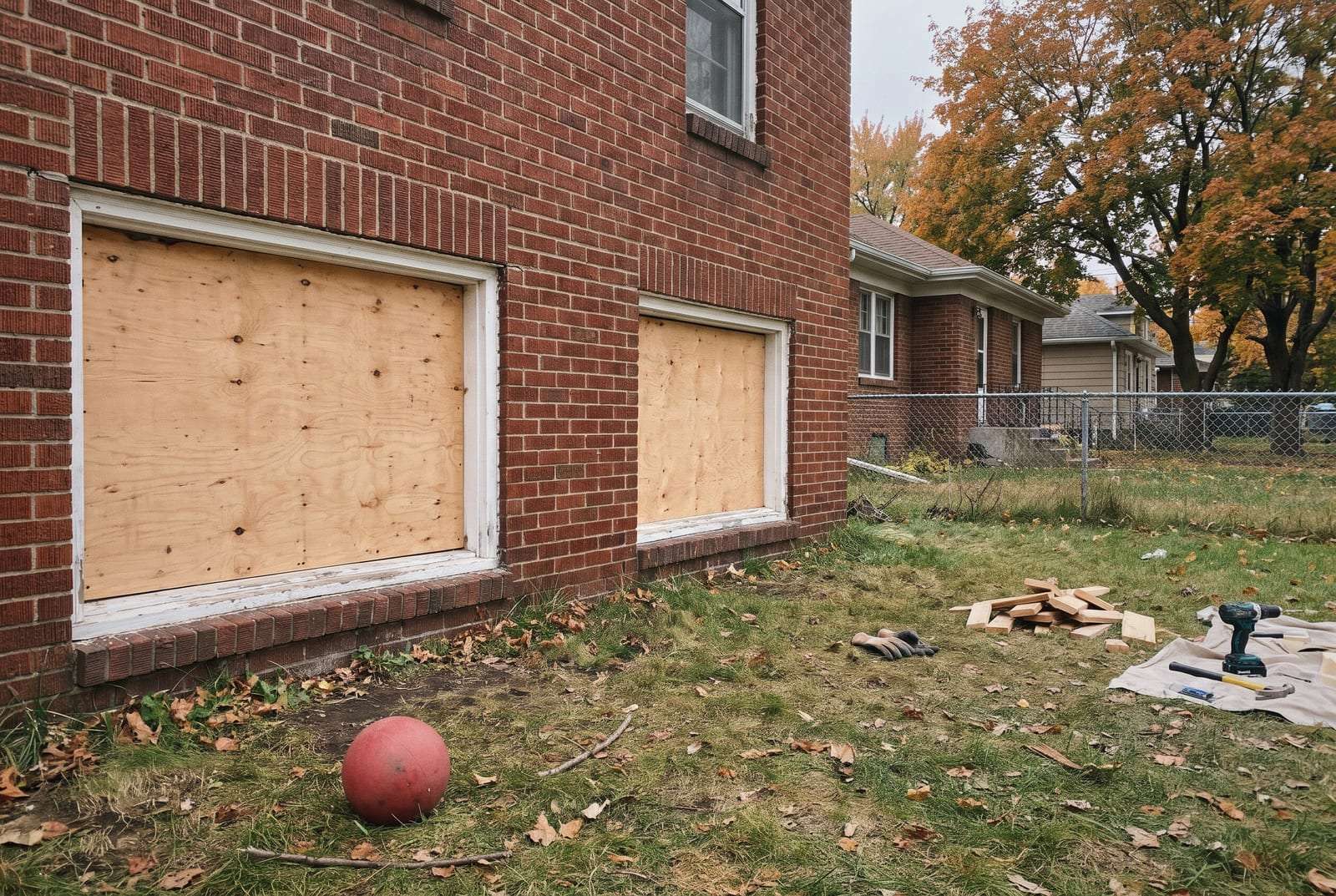
- Tarping and board-up. Torn roof areas are covered with fastened tarps, and broken windows and doors with plywood, until the permanent repair.
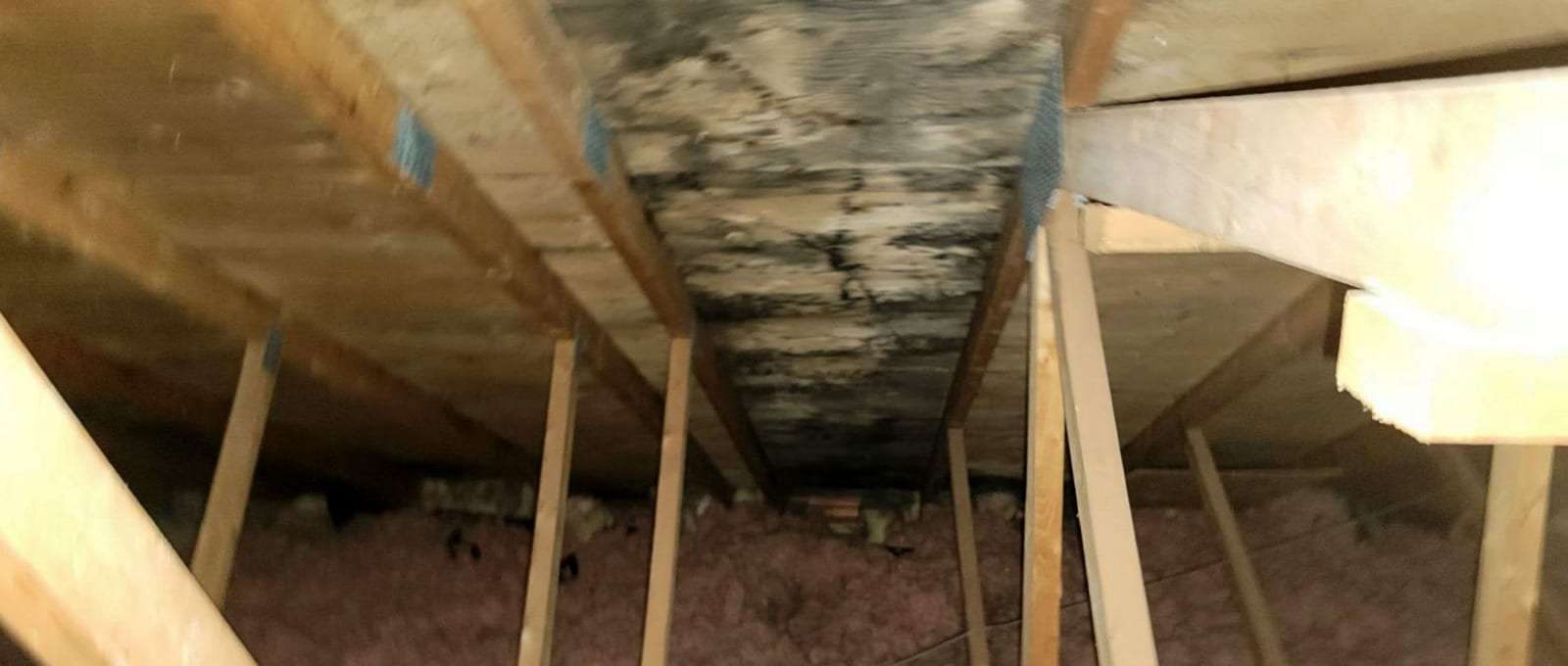
- Water removal after a roof breach. Rain through the roof soaks insulation, ceilings and walls. The wet material comes out and the structure is dried, as with any water damage.
- Water from a fallen tree. Once a tree service lifts the tree off, the hole is covered and the water removed before the ceiling is rebuilt.
- Ice-dam leak repair. Wet insulation and drywall at the top of outside walls come out, the cavity is dried and the wall patched and painted. Clearing the ice and fixing the roof edge are a roofer’s job.
Spring Storms, Straight-Line Winds and Winter Snow in Minnesota
For Twin Cities houses, storm damage comes in two seasons. From spring into late summer, severe thunderstorms bring hail, tornado warnings and straight-line winds that can flatten trees like a small tornado. Mature trees over older houses mean one storm can drop limbs on roofs along a whole street.
Winter brings the slower kind. Heavy, wet snow loads low-slope roofs, garages and porches, and freeze-thaw swings build ice dams at the eaves of houses that lose heat into the attic. Ice-dam water often shows up weeks later as a stain high on an outside wall.
Had Seward look at some old water staining in our upstairs bedroom last spring. Short visit, no scare talk. He checked it with a meter, said it was dry and not urgent, and left. Then in February an ice dam backed water into that same wall. Called first thing. They remembered the house and had a crew here that afternoon. They laid plastic down the stairs and took it with them. Found a bit of drywall dust on a windowsill later. That was about it.
Safety and Documentation After a Storm
- Stay clear of downed power lines and anything they touch, and report them to the power company.
- Keep out of rooms under a sagging ceiling or a tree on the roof.
- If you smell gas, leave and call the gas company from outside.
- Shut off the water if a pipe broke, and the power if water is near wiring, but only from a dry spot.
- Take photos and video of the damage, inside and out, for your own records.
- Keep receipts for tarps and anything else you buy to protect the house.
Trees and Branches Through the Roof
What should you do if a tree or branch has opened the roof?
Get everyone out of the rooms underneath, and keep away from any wires the tree brought down.
Then call a tree service: the hole can’t be covered while the tree is in it. Once the tree is off, the opening is tarped, the water is removed from the attic, ceilings and walls, and the drying starts. Take photos before the tree is cut up.
Can the inside be repaired before the roof is fixed?
Drying can start once the opening is covered. New drywall, insulation and paint wait until the roofer has made the roof watertight, so the new work doesn’t get wet again.
Get a Storm-Damaged House Covered and Dry
Send the address and what the storm opened, and the crew can sort out the covering, drying and inside repairs with you.