
Mold Remediation in Minneapolis Homes and Rentals
Containment, removal, drying and rebuilding for mold behind walls, on attic sheathing and in damp basements of houses and rentals.
Moisture First, Then Containment, Removal and Drying
For a home or rental with mold on drywall, framing or sheathing, remediation removes the growth and the conditions that fed it. Mold needs moisture, so finding the source behind it comes first: a slow leak, condensation, or water wicking up from a floor. Mold taken off a wall that stays wet grows back.
Then the work area is closed off. Drywall, insulation and carpet pad growing mold are cut out and bagged, and solid surfaces are cleaned, HEPA vacuumed and dried as with any water damage. The rebuilding follows: drywall, trim, flooring and paint.
Mold Behind Walls, in Attics and Under Floors
For a musty smell or a stain that keeps returning, the growth is usually out of sight, where water sat against a surface for days.
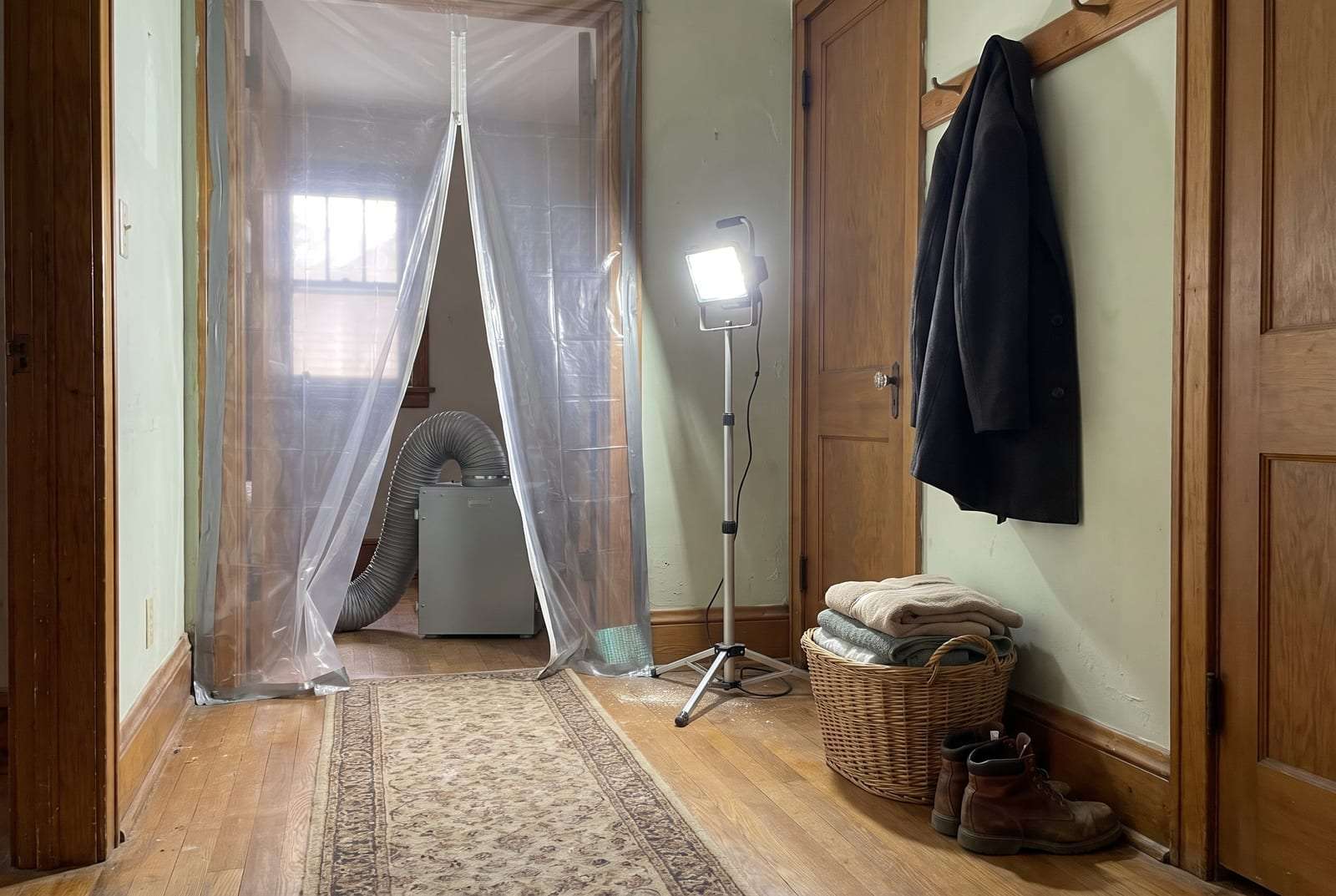
Containment keeps the cleanup from spreading the growth. Plastic sheeting closes off the work area, a zipper door lets people in and out, an air scrubber with a HEPA filter cleans the air, and nearby vents are covered so the ducts don’t carry spores to other rooms.
| Location | Moisture source | Warning sign | Typical fix |
|---|---|---|---|
| Behind a tub or shower wall | A dripping valve or drain, or failed grout and caulk | Musty smell, soft drywall, peeling paint on the far side | Leak fixed by a plumber; wet drywall removed; studs cleaned and dried |
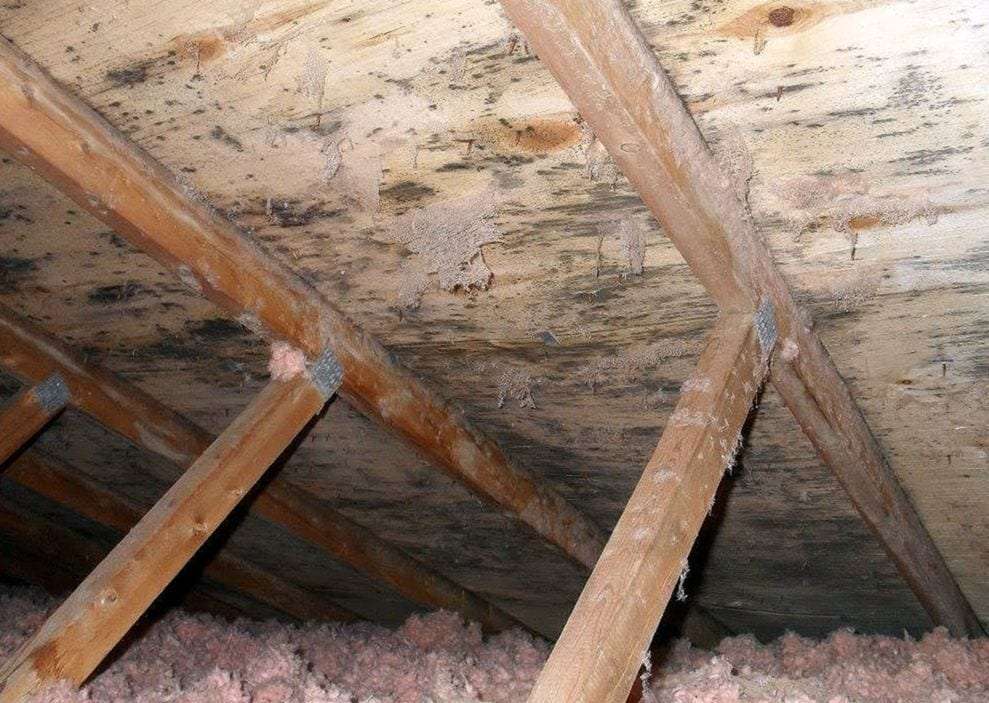
| Attic roof deck | House air condensing on cold sheathing; bath fans venting into the attic | Dark spotting, frost on nail tips, damp insulation | Air leaks and venting corrected; sheathing cleaned or replaced |
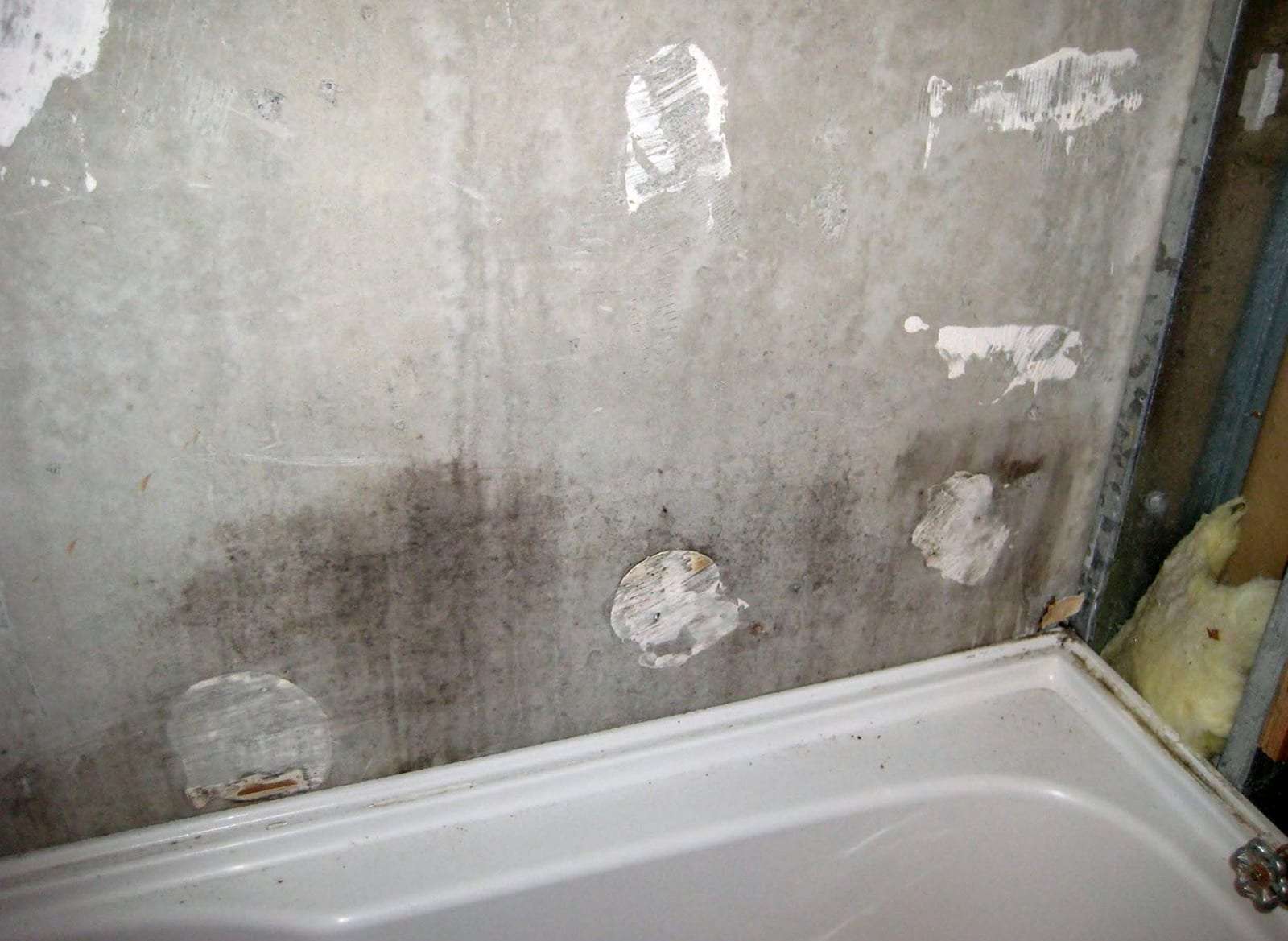
| Finished basement walls | Seepage, summer humidity or an old wet basement | Musty smell, stains along the bottom of the drywall | Damaged drywall and insulation cut out; walls cleaned and dried |
| Under flooring and carpet | An appliance or pipe leak, or water left after a flood | Cupped or soft flooring, a stained pad | Flooring and pad pulled up; subfloor cleaned and dried |
| Closets on outside walls | Indoor humidity condensing on cold walls with little air moving | Gray or black specks behind furniture or low in a closet | Surface growth cleaned; humidity lowered; furniture moved off the wall |
Mold, Mildew or Dirt, and When Testing Is Worth It
How can you tell mold from mildew or ordinary dirt?
Mildew is surface mold: flat, powdery and gray or white, and it wipes off hard surfaces like shower grout. Mold rooted in a material looks fuzzy or slimy, green, black or brown, and comes back after cleaning.
Dirt doesn’t spread or smell musty. A dab of diluted bleach is a quick check: mold and mildew lighten in a minute or two, dirt doesn’t.
When is mold testing worth considering?
Most visible mold doesn’t need a test; it needs removing, along with its moisture source. Testing is worth considering when you smell mold but can’t find it, when someone in the household has a health concern such as asthma, or when a landlord, tenant or buyer asks for a clearance check. An independent firm usually takes the samples for a lab.
When Mold Needs Remediation and When Cleaning Will Do
For growth you’ve found yourself, the size of the patch and what it grows on decide the approach. Remediation applies when:
- The patch covers more than about 10 square feet, roughly 3 feet by 3 feet.
- It grows in drywall, insulation, carpet pad or ceiling tile, which cleaning can’t reach into.
- It follows a leak, a flood or sewage water, or the wall is still wet.
- It sits behind a tub surround, inside a wall or in the attic.
- Someone in the home has asthma, allergies or another health concern.
- It came back after cleaning, a sign the moisture is still there.
Simple cleaning will do for a small patch of mildew on tile, grout, glass or a painted sill. Scrub it with detergent and water, dry it, and fix what made it damp, often a bath fan left off.
Humid Summers, Sealed Winter Houses and Mold
For Minnesota houses, mold has two seasons. Humid summer air settles into basements, where cool foundation walls and stored boxes stay damp unless a dehumidifier runs. In winter, a house sealed tight against the cold holds in moisture from cooking and showers, and it condenses on the coldest surfaces: attic sheathing, window frames, outside walls.
Attic roof decks are a common winter spot where a bath fan vents into the attic or warm air leaks around ceiling lights. Ice dams push meltwater into ceilings and walls, and a basement left damp by the spring thaw can grow mold by summer.
We noticed a musty smell in the basement bathroom and found some mold behind the wall. Riley opened it up carefully and traced it to a slow leak at the shower valve. Removed the damaged drywall, treated the studs, and dried it out. Really took the time to explain what he was seeing. Clean work, and the smell is gone.
Reduce Moisture Until Remediation Starts
- Stop the water if you can: close the valve to a leaking fixture or set a pan under a drip.
- Run a dehumidifier to keep indoor humidity between 30 and 50 percent.
- Run the bath fan during showers and the range hood while you cook.
- Leave the growth alone: scraping or brushing sends spores into the air.
- Keep the door to the room closed, and don’t aim fans at the growth.
Contain the Mold and Take It Out
Say where you see or smell the mold, and the crew can plan the containment, removal and drying with you.