
Fire, Smoke and Soot Cleanup in Minneapolis
Soot removal, odor treatment and drying for houses and rentals after a fire, whether it stayed on the stovetop or brought the fire trucks.
Most Fire Damage Is Smoke, Soot and Water
For a house or rental after a fire, the burned area is often the smallest part of the damage. Smoke carries soot into every room the hot air reaches, and hose water soaks floors, wall cavities and the ceiling underneath.
In the cleanup, openings are covered first. Then the water is extracted and the structure dried, soot is cleaned off every surface, your belongings are sorted and cleaned, and the odor is treated at its source. Once the building is clean and dry, the crew takes on the rebuilding: drywall, flooring, trim and paint.
Before You Re-Enter a Fire-Damaged Property
- Wait for the fire department’s word that the building is safe to enter.
- Leave the gas and power off until the utility or an electrician checks them.
- Wear an N95 mask, gloves and long sleeves around soot and ash.
- Don’t run the furnace fan until the filter is changed, or it can spread soot through the ducts.
- Don’t scrub soot yourself: water pushes it deeper into paint and fabric.
- Throw out food and medicine that sat near the heat, smoke or hose water.
Soot and Smoke Residue by Type
For soot and smoke odor on walls, ceilings and cabinets, the type of residue decides the cleaning method. A hot fire burning wood or paper leaves a dry powder, a smoldering fire a greasy film, and a kitchen fire a yellow film you smell more than see.
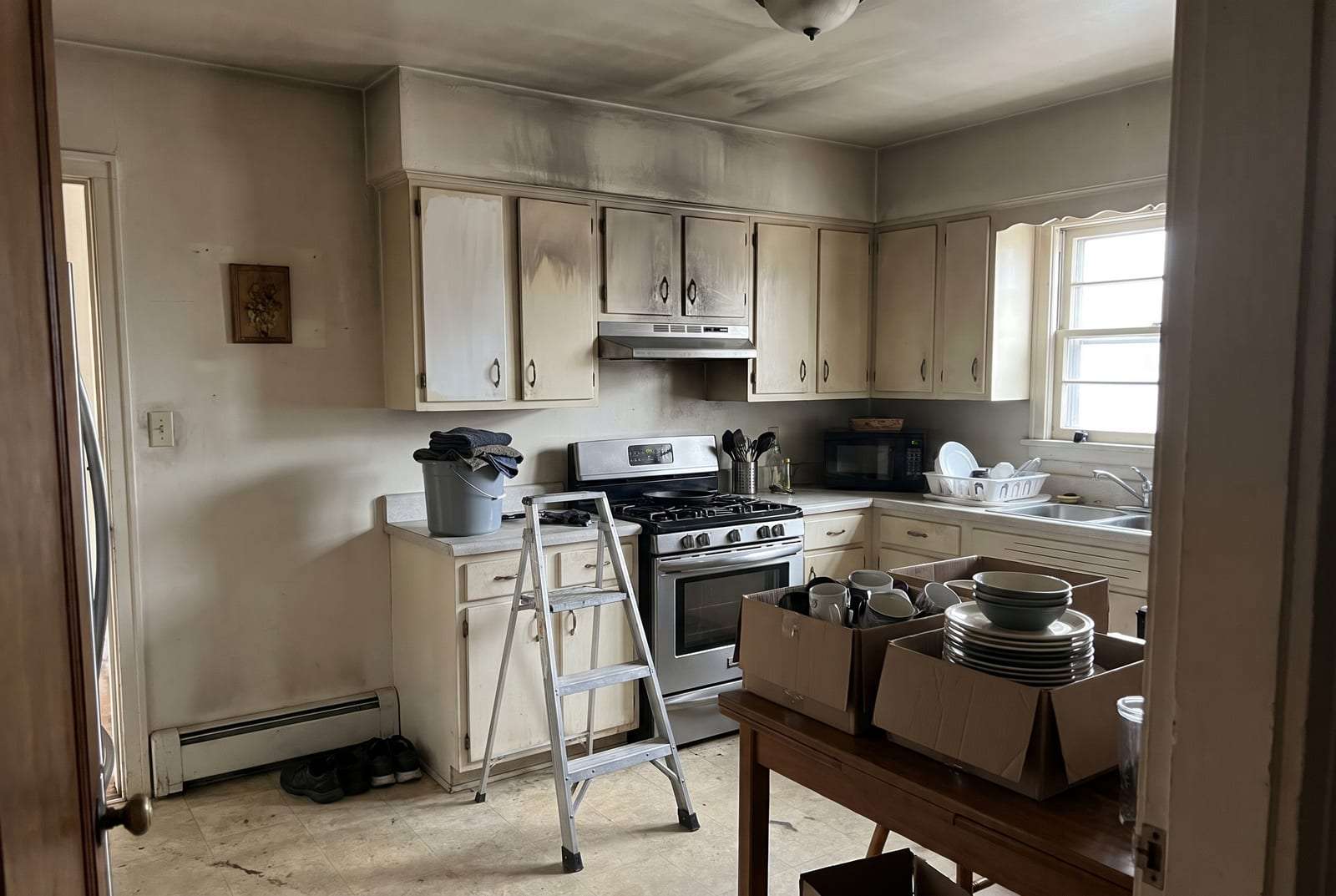
Dry soot comes off before anything wet touches it: HEPA vacuuming, dry soot sponges, then washing. One wiped cabinet door beside untouched ones shows how much film a kitchen holds. Oily residue takes degreasers, and stains that survive cleaning get a sealing primer.
| Residue | Where it settles | Cleanup method | Risk if left |
|---|---|---|---|
| Dry soot | Upper walls, ceilings, door tops and cold outside walls | HEPA vacuuming and dry sponges, then washing | Smears if wiped wet; acids corrode metal and etch glass |
| Wet, oily smoke residue | Walls, windows and closets, from burning plastic and foam | Degreasers and hand washing, then a sealing primer | Stains that bleed through paint; a lasting odor |
| Protein residue | A thin yellowish film on kitchen cabinets, walls and ceilings | Degreasers and enzyme cleaners, cabinets washed inside and out | Yellowed paint and varnish; odor that returns on warm days |
| Oil furnace puffback soot | Black strings of soot along ceilings and registers wherever the ducts reach | Burner repaired by a heating contractor; ducts and surfaces cleaned | Oily stains; more soot each time the furnace runs |
| Water and debris from firefighting | Floors, carpet pad, wall cavities and the ceiling underneath | Debris cleared, water extracted, wet drywall cut out, structure dried | Mold within days, swollen flooring, rust |
The Five Parts of Fire and Smoke Cleanup
Whatever the size of the fire, the work after it takes in five parts.
- Soot removal. Every surface the smoke reached is cleaned for its residue type, light fixtures and drawer insides included.
- Odor treatment. Cleaning removes most of the smell; deodorizers, air filtration and sealers handle the rest.
- Drying the water from firefighting. Hose water is extracted and the structure dried as with any water damage, before mold takes hold.
- Cleaning of contents. Dishes, glass, metal and hard furniture wash well and most clothing launders clean; mattresses and soaked upholstery often go.
- Board-up and securing openings. Broken windows, a forced door and holes cut to vent the fire are closed with plywood or tarps.
Getting Smoke Odor Out of Walls and Furniture
Can smoke odor in a Minneapolis home be removed from the walls?
Usually, yes. Painted drywall and plaster hold residue at the surface, so thorough cleaning removes most of the odor, and an odor-blocking primer seals in the rest. Drywall that charred or soaked up hose water is replaced.
Can furniture that smells of smoke be saved?
Hard furniture cleans well. Light smoke often comes out of upholstery with cleaning and deodorizing, but foam that took on heavy smoke or hose water seldom recovers, and mattresses and pillows are usually replaced.
Why does a smoke smell come back after the house was cleaned?
Warm, humid days draw odor out of residue still hiding in a wall cavity, the ductwork, the range hood or a sofa cushion. Working out which one is holding it is part of the job; once found, it is cleaned, sealed or removed.
The tech handled the soot after a pan fire left a film all over our kitchen. He went over the cabinets and ceiling with dry sponges first, then washed everything. He also found smoke in the range hood filter and replaced it. Smell gone within a day! He explained why wiping soot with a wet rag just smears it. Checked back a week later to make sure the odor didn't return. Glad we called them.
Heating-Season Fires in Older Minneapolis Houses
For Minneapolis homes, fire risk climbs from December to February, with space heaters near bedding or curtains, furnaces running hard through cold snaps and fireplaces in steady use. A chimney fire can crack a flue liner and push smoke into the attic or walls, where it is easy to miss.
Many houses and duplexes here were built before World War II, and some still run on knob-and-tube or cloth-covered wiring never meant for today’s loads. In an up-and-down duplex, smoke travels through the shared stairway and attic, so a unit that never saw a flame can still need cleaning.
Plan the Cleanup After a Fire
Send the address and what burned, and the crew can work out the board-up, drying and soot cleaning with you.