
Frozen and Burst Pipes in Minneapolis Homes
For a pipe that froze, split or leaked into a ceiling, and for getting the plumbing ready before winter.
Why a Frozen Pipe Leaks Once It Thaws
When a pipe freezes, the damage often waits for the thaw. Ice forms in the line, pressure builds between the ice and a closed faucet, and the pipe splits. Usually nothing leaks until the ice melts; then water under full pressure pours out, sometimes inside a wall or ceiling where no one sees it.
Supply lines are not the only pipes at risk. Hot-water heating pipes along outside walls can freeze when the heat fails in a cold snap, and a slow leak at baseboard level soaks the flooring and the bottom of the wall before anyone notices.
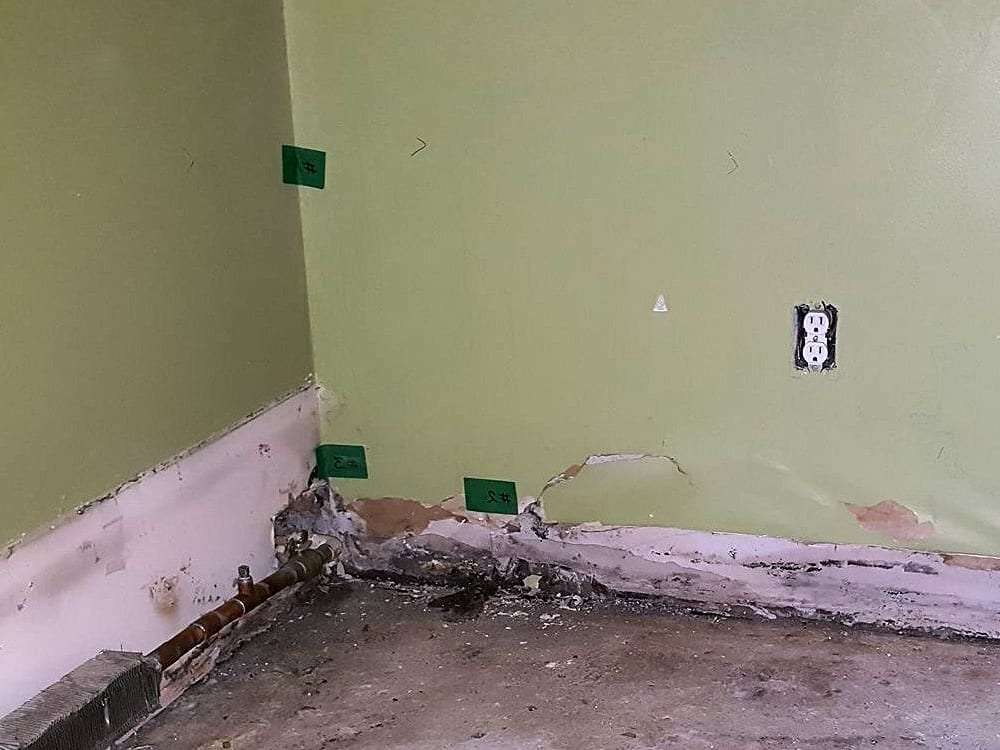
Frozen Line or Split Pipe: Symptoms and What to Do
For a line that stopped flowing, bulged or began to leak, the sign usually points to the cause. The pipe repair itself is a plumber’s job; the water it leaves behind is the restoration side.
| Symptom | Likely cause | What to do now | What a restoration visit covers |
|---|---|---|---|
| No water at the tap during a cold snap | Ice blocking a line on an outside wall, in a crawl space or in an unheated room | Leave the faucet open, warm the area gently and never use an open flame | Nothing if the pipe holds; if it leaks once it thaws, extraction, drying and repairs to wet ceilings or walls |
| Bulging or frosted pipe | Ice expanding inside the line, often just before it splits | Shut off the main water valve, open the faucets to drain the line and call a plumber | Water removal and drying if it splits, with moisture checks in the wall and floor around it |
| Stained ceiling or hissing in the wall | A split line leaking inside a ceiling or wall cavity | Shut off the main, set a bucket under the stain and keep everyone out from under a sagging ceiling | Opening the wet ceiling or wall, drying the cavity, then new drywall, insulation and paint |
| Water through a light fixture | Water pooled above the ceiling and following the wiring | Keep that circuit off at the panel if you can reach it from a dry spot, stay clear of the fixture and shut off the water | Opening and drying the ceiling, then the rebuild; the fixture and wiring are for an electrician to check before the power goes back on |
Thawing a Frozen Pipe on Your Own
A line that is frozen but not yet split can often be cleared with gentle heat before it does any damage.
Should you thaw a frozen pipe yourself?
You can try, if you can see the frozen section and the pipe is not split. Open the faucet it feeds, then warm the pipe gently, working back from the faucet, with a hair dryer, a heating pad or a space heater kept well away from anything that can burn. Never use a torch or any open flame, and keep the faucet open as the ice melts.
If you cannot find or reach the frozen section, or the pipe is cracked or bulging, shut off the main water valve and call a plumber. If water already got into a ceiling or wall, the cleanup and drying are the part a restoration visit handles.
After a Pipe Bursts: Shut It Off and Drain It
- Shut off the main water valve, often near the water meter where the line comes through the foundation.
- Switch off power to wet areas at the panel if you can reach it from a dry spot.
- Open the faucets, upstairs and down, to drain what is left in the lines.
- Move furniture, rugs and boxes out of the wet area, and set a bucket under any drip.
- Photograph the damage for your own records before anything is moved or thrown out.
Drying Out What a Split Pipe Soaked
Once the plumber has fixed the pipe, the water it left behind is restoration work: extraction, opening wet ceilings and walls where needed, and structural drying with air movers and dehumidifiers. Water from a pipe upstairs rarely stays put. It runs along joists and down wall cavities and can show up a room away from the leak, so the drying follows the water, not the stain. Moisture checks show when the framing and subfloor are dry, not just the surface.
The rebuild comes after: drywall, insulation, flooring, trim and paint, with each stage documented along the way for any insurance claim. As with any water damage, clean water caught early leaves more that can be dried in place.
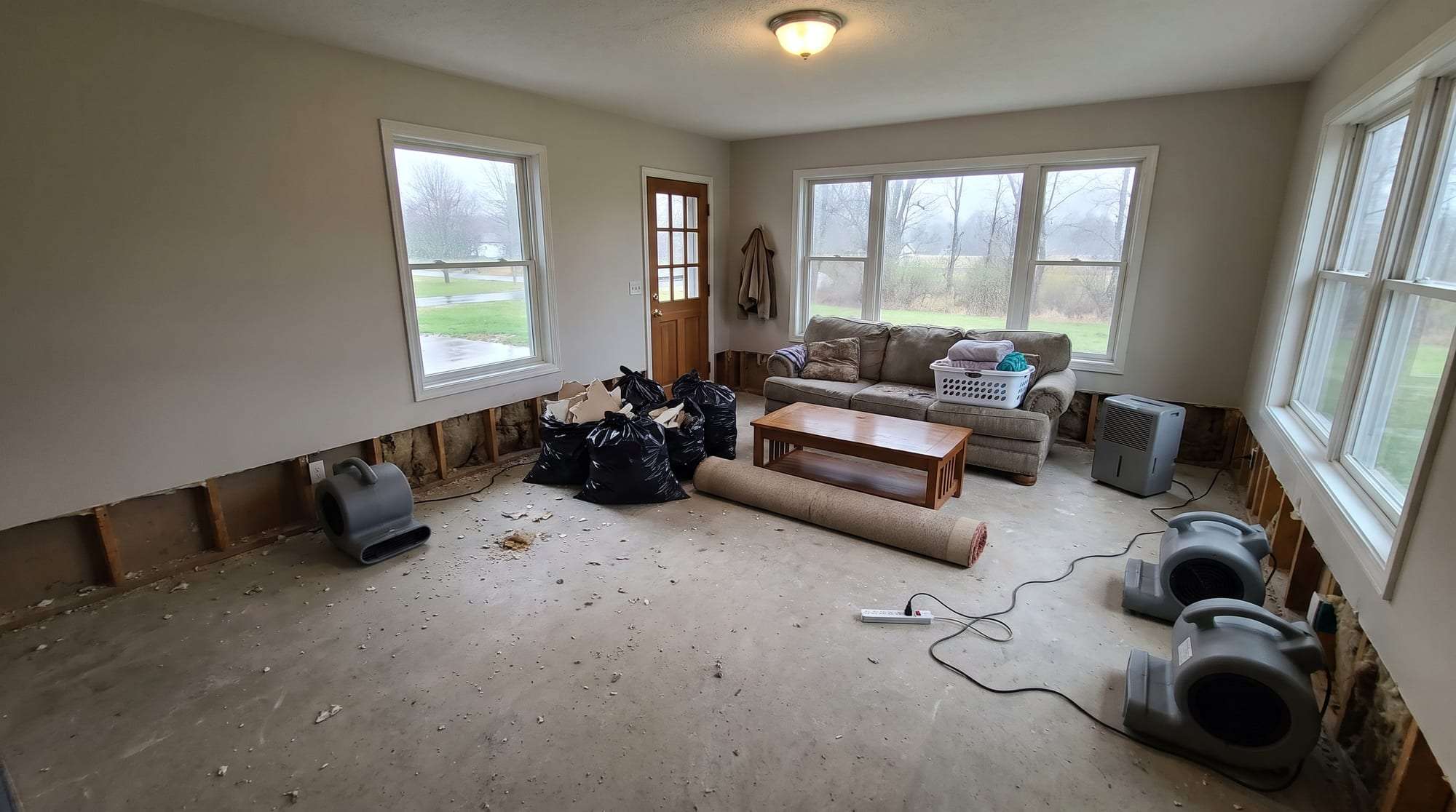
Sub-Zero Snaps, Unheated Corners and Empty Units
In Minneapolis, the risk peaks in sub-zero cold snaps, when wind finds every gap in an old wall. Older houses and rental buildings often run pipes through unheated spaces: crawl spaces, porches closed in long ago, sink cabinets against exterior walls and basements with drafty rim joists. A unit with the heat turned down, or a duplex standing empty between tenants, can freeze overnight.
Before the First Hard Freeze
- Disconnect garden hoses, close the indoor valves to the hose bibs and drain them.
- Insulate pipes on exterior walls and in crawl spaces.
- Seal drafts near plumbing, such as gaps at the rim joist and around pipes through walls.
- Find the main water shutoff and make sure it turns.
- On sub-zero nights, open the cabinet doors under sinks on outside walls and let a faucet drip.
- In a rental, show tenants where the shutoff is and ask them to keep the heat on when away.
Get Help With the Water a Pipe Left Behind
Say which ceilings, walls or floors got wet and whether the water is off now, by phone or with a request.